
When a patient’s pain involves tendon issues, GB34 is usually the first point that comes to mind — and classical theory backs that instinct up directly.
Yanglingquan. Yang Mound Spring. Is the Influential Point of Tendon and Sinews — the single point classical theory designates as the master point for the entire tendinous system. Knee pain, hip tightness, spasm disorders, post-stroke rigidity, sciatica, even Western liver and gallbladder diseases — GB34 shows up in the treatment plan for many of these problems.
And yet it’s one of the most commonly mis-located points on the body. Most practitioners are taught a single landmark for it — and that single landmark is exactly why so many miss it. See if GB34 made my Top 10 Acupuncture Points List here!
More on that fix in a moment. First, the point at a glance.
Anatomy: How to Actually Find GB34
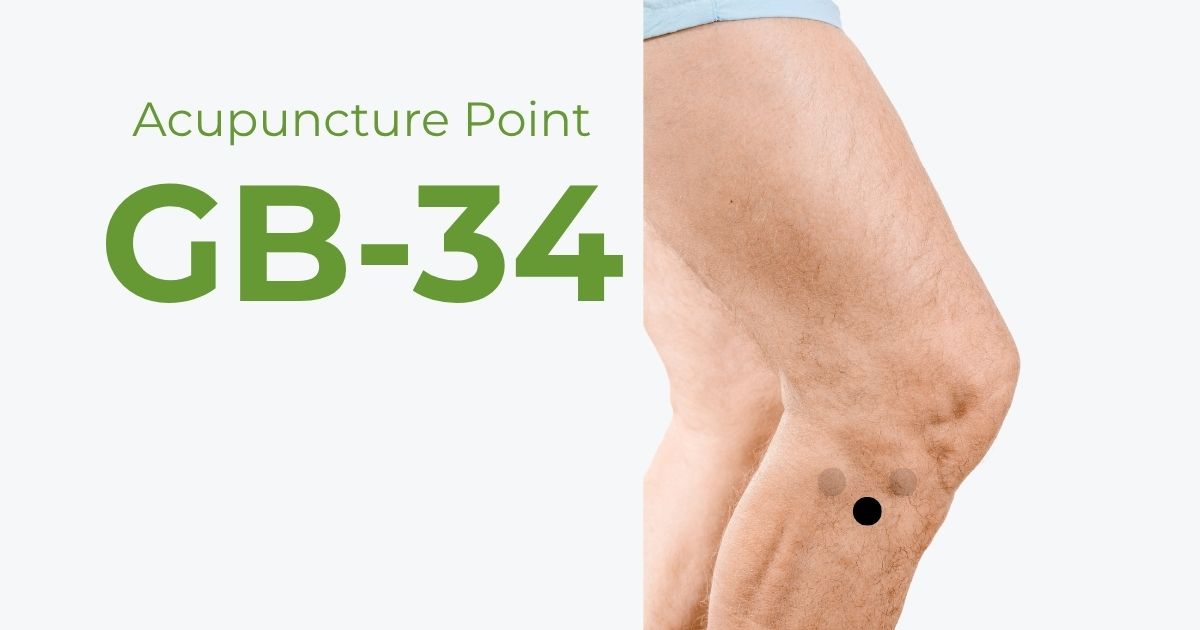
GB34 sits on the lateral lower leg, and the way most references teach it is where the location errors start.
The problem with the standard instruction. Most texts describe GB34 as simply “anterior and inferior to the head of the fibula.” – which is technically true. However, that single landmark leads to a surprising number of misses — the depression it’s describing is shallow, and “anterior and inferior” leaves too much room for interpretation and often ends up too close to the head of the fibula.
The two-landmark fix. Locate both of the following before you commit to the point:
- The head of the fibula — palpate the bony prominence on the lateral lower leg, just below the knee
- The lateral condyle of the tibia — palpate the bony prominence directly medial to the fibular head, at the same height
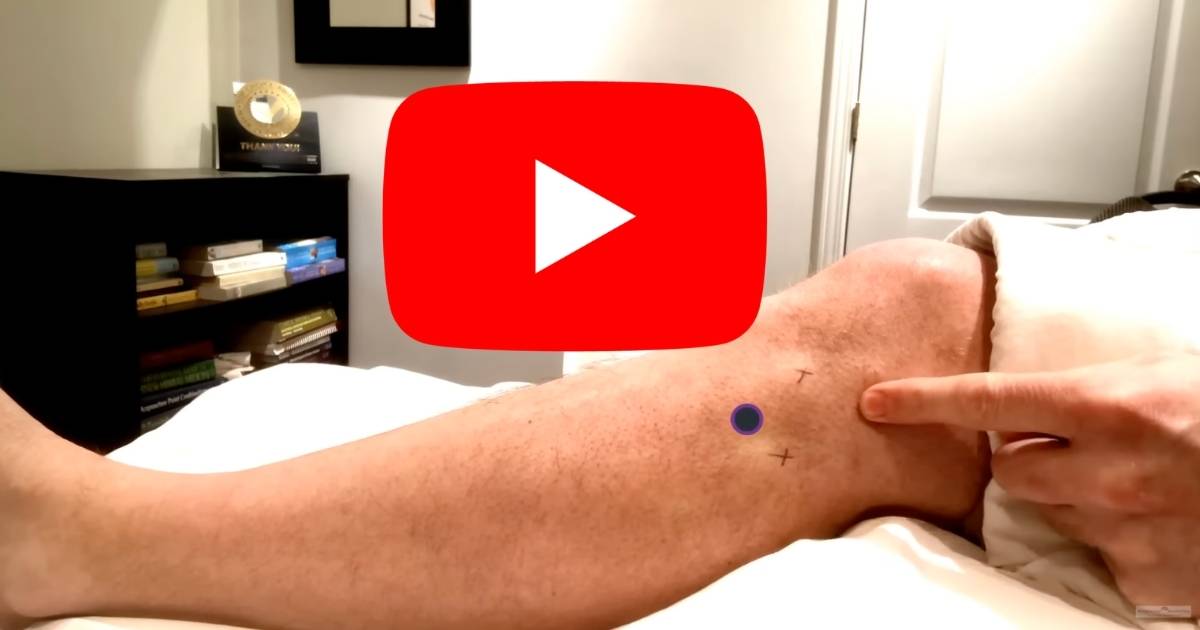
GB34 sits in the depression slightly inferior to the midpoint of these two landmarks (see link to my YouTube video). Finding the point relative to both bony references — rather than the fibular head in isolation — removes most of the guesswork.
Patient positioning. GB34 is unusually versatile to locate and needle — it can be palpated and needled accurately with the patient supine (face up) or prone (face down). That makes it easy to work into a treatment regardless of what position the rest of the point prescription requires.
Posterior GB34: a variant worth knowing. There’s a second, less commonly taught location sometimes called “posterior GB34” — found directly posterior to the fibular head, over the common peroneal nerve. Reach for this location specifically when sciatica is the chief complaint – particularly when the pain refers down to the foot and ankle area. See the full walkthrough of both locations in the video below.
Needling Technique and Sensation
Needle sensation at GB34 is typically achy — but noticeably milder than the strong, deep ache patients often report at ST36. This makes GB34 a comparatively well-tolerated point even when a Deqi response is desired. Perpendicular needling is the most common direction.
The Western Science of GB34
GB34 has become one of the most-studied acupuncture points in modern research — not for one narrow application, but because its clinical reach is so broad that it keeps showing up as a research target across completely different fields of medicine.
Brain activity and central mechanism. An fMRI study found that acupuncture at GB34 changes activity across multiple brain regions — including areas tied to cognition, movement, and emotion — suggesting its wide-ranging effects come from a whole-brain response rather than one localized switch.
Parkinson’s disease research. Separate fMRI research found GB34 stimulation increased activity in brain regions impaired by Parkinson’s disease, consistent with prior studies linking the point to PD symptom improvement — though more clinical trials are still needed.
Liver and gallbladder function. A 2024 study found that stimulating GB34 measurably shifted bile and liver metabolism markers in post-surgical gallstone patients — a modern echo of its classical use for liver and gallbladder disease dating back to the Lingshu.
The TCM Perspective
GB34 is classified as the Influential Point (Hui-Meeting Point) of the Sinews — the point classical theory identifies as having the strongest relationship to tendons and ligaments throughout the entire body. As the He-Sea and Earth point of the Gallbladder channel, it also carries a harmonizing action along the Shaoyang, and a direct relationship to Liver and Gallbladder function.
Classical Actions:
- Relaxes the sinews and benefits the tendons and ligaments
- Invigorates the channel and relieves pain and muscle spasm
- Benefits the hips, knees, and legs
- Expels Wind-Damp from the joints
- Dredges the Liver and Gallbladder and activates the collaterals
- Harmonizes the Shaoyang (Gallbladder/San Jiao axis)
- Resolves hypochondriac pain and clears Gallbladder channel stagnation
Classical Indications:
- Knee pain, stiffness, and swelling
- Lateral hip and leg pain
- Muscle spasm and cramping, including calf cramps
- Hemiplegia and post-stroke rigidity
- Hypochondriac (rib-side) pain
- Bitter taste in the mouth, jaundice, liver and gallbladder disease
- Sciatica (particularly via the posterior GB34 location)
Clinical Pearls from 25 Years in Practice
- Use two landmarks, not one. As covered above — the fibular head alone is the single biggest source of GB34 location errors. Palpate the lateral condyle of the tibia alongside it every time.
- GB34 works face up or face down. Few points on the leg are this reliably locatable in both supine and prone positioning — a real advantage when planning point order in a treatment.
- GB34 and SP9 — needled toward each other. When GB34 and SP9 are used together in the same point prescription, they sit at essentially the same lateral level on opposite sides of the leg — meaning the needles are angled toward each other across the leg. Worth keeping in mind when planning needle angle and depth for prescriptions that pair these two points.
- Choosing standard vs. posterior GB34. Reach for the posterior location — directly posterior to the fibular head, over the common peroneal nerve — specifically when sciatica is the chief presenting complaint down the lateral ankle and foot.
- Don’t overlook it for acupressure. GB34’s location and depth make it an excellent acupressure point, not just a needling point — a strong option for home self-care recommendations.